By John Barrow published in 1735 with a revised edition in 1758. It was published in two volumes with entries in alphabetical order and was the first dictionary of the arts published in the english language. The author was a compiler of similar works including a system of navigation and a universal dictionary of the arts and sciences.
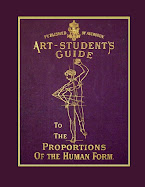
The first picture is a photograph taken from the book which I came across because it is for sale on Ebay.

The second picture is from a scan of the book which is available for viewing as a digital file at
The Collection of the Family of Henry Posner Sr. at the Carnegie Mellon University. Here is a link to the
First Volume, and here is a link to the
Second Volume. The first volume is also available on
Google Books but the illustrations are compromised by the scanning process.


The book covers: I. The Arts of Designing, Drawing, Painting, Washing Prints, Limning, Japanning, Gilding in all their various kinds. Also Perspective, the Laws of Shadows, Dialling, &c.
II. Carving, Cutting in Wood, Stone; Moulding and Casting Figures in Plaster, Wax Metal; Also Engraving, and Etching, and Mezzotinto.
III. A Brief Historical Account of the most considerable Painters, Sculptors, Statuaries, and Engravers, with those Cyphers or Marks by which their works are know.
IV. An Explanation of the Emblematical and Hieroglyphical Representations of the Heathen Dieties, Powers, Human Passions, Virtues, Vices &c. of Great Use in Historical Painting.
V. The Production, Nature, Refining, Compounding, Transmutation and Tinging all sorts of Metals and Minerals of various Colours.
VI. The Arts of Making, Working, Painting or Staining all Sorts of Glass and Marble; also Enamels, the imitation of all sorts of Precious Stones, Pearls, &c. according to the Practice both of the Ancients and the Moderns.
VII. Dying all Sorts of Materials, Linen, Woollen, Silk, Leather, Wood, Ivory, Horns, Bones: also Bleaching and Whitening Linen, Hair &c.
VIII. The Art of Tapestry-Weaving, as now performed in England, Flanders, and France, either of the High or low Warp; also many other curious Manufactures
IX. A Description of Colours, Natural and Artificial, as to their Productions, Natures or Qualities, various Preparations, Compositions and Uses.
X. The method of making all kinds of Inks, both Natural and Sympathetical; and also many other curiosities not here to be specified, whereby this is rendered a more Complete Work than has hierto appear'd in any language.

Here is an excerpt:
"Of DRAWING the whole body.
"I. Begin with the head, and be sure that you give it its just proportion, answerable to what you intend the whole body shall be; then sdraw the shoulders in their exact breadth, nest to the the trunk of the body, beginning at the arm pits, and so drawing down to the hips on both sides, observing withal the exact breadth of the waist; and in the last place, draw the legs, arms an hands, according to your pattern.
"II. First draw with a coal, and also very lightly and faintly, not drawing any thing perfect (that it may be the easier mended when it is amis) and when the has been done, finish one thing after another as curiously as you can.
"III. Let those joints, sinews, muscles and veins which are parallel, be plac'd opposite to one another in a strait line (as shoulder to shoulder, hip to hip, knee to knee &c.) in order to this, draw strait cross lines for your guide; observing that which way soever the body turns or bows, these line may answer accordingly."

"Of DRAWING a NAKED BODY
"I. Draw the head in an oval,, one fourth part or the hair, one foutrth part for the forehead, and the last for the mouth and chin.
"II. Having drawn the head, measure out eight times the length of it ( the head making one of the eight perts) and draw a strait line from the top of the head to the sole of the foot.
"III. Let there be one head's length from the chin for the breast, the next eighth part will reach to the navel, the fourth part to the privities, the fifth to the middle of the thigh, the sixth part to the lower part of the knee, the seventh to the small of the leg, and the eighth part to the heel.
"IV. You must take car to draw the muscles exactly as they are in life; the breadth of the shoulders should be about two measures of the had, the breadth of the hips two measure of the face ; the arms as stretched out to their full length, are just the length of the whole figure, the breasts also accounted; but without the breasts they are but six.
"V. The arms, when they hang strait down, reach within a span of the knee; the length of the hand is just the length of the face.
"VI. Let the head be drawn first with the utmost exactness, and next to that the shoulders in their just breadth, after these draw the trunk of the body, and the rest in order as before directed.
"VII. Let the joints, muscles, sinews, &c. be all place in their proper and natural places, and also be proportionable as to magnitude, similitude and parts, lest it seem crooked and deform'd.
"VIII. Let every parallel joint have a moderate bending so as to answer its opposite in nature.
IX. It will be of great advantage to practice much drawing after the life, and after good prints of anatomy and statues made of plaster of Paris, which is the only way to arrive at the perfection of drawing a naked figure well.
"X. A picture ought also to be quick, free and lively; and if there be many of them in one piece, they ought to be so ordered as to not appear crowded, or to fall offensively; but being dispos'd gracefully (on the foreground especially) so to manage the whole, that the rest of the figure decline and lessen proportionately and gradually, both in magnitude, height and strength according to their several differences."
The illustrations were evidently influential on the work of early American authors of drawing books, notably
Buchanan's Initiatory Drawing Lessons examples of which are published in my ebook How to Draw the Human Figure, and Chapman's American Drawing Book which was the basis for the Dartmouth University course of freehand drawing illustrated in my other ebook How Harry Cook Learned to Draw.
.
Laughter, Laughter, Meekness, Love, Love, Rapture, Rapture, Extreme Bodily Pain.
How to draw feet, how to draw expression, how to draw perspective.
A modern reprint.


 at Amazon.com.

 at Amazon.com. The author Emily Ball trained at Exeter College of Art, and later at the Surrey Institute of Art and Design, and now runs highly successful courses in contemporary painting and drawing, as well as continuing to develop and exhibit her own work as an artist.


 .
.




 .
.


