Showing posts with label character design. Show all posts

Saturday, June 27, 2009

Antique Medical Anatomy Book


A series of prints from a 1750 medical anatomy book including, studies of the head, the human skeleton back view, human skeleton front view, human muscles, muscles of the leg, muscles of the arm, bones of the hand and bones of the foot, phrenology, a character study of a human resembling a bird, a character study of a human resembling a dog, a character study of a human resembling a pig, a character study of a human resembling an owl, studies of religious ecstasy and insanity.

Unfortunately I don't know anything about the book from which they came except for the date of 1750.


These prints are on sale on on Ebay.com.


Physiognomy and the Meaning of Expression in Nineteenth-Century Culture (Cambridge Studies in Nineteenth-Century Literature and Culture)


Physiognomy In Profile: Lavater's Impact On European Culture


Visages et caracteres: etudes de physiognomie


Anatomy of the Human Body the XIIth edition.

Anatomie des menschlichen Körpers.


The Science of Art: Optical Themes in Western Art from Brunelleschi to Seurat


Here is a link to a site with more examples of antique medial books, the University of Virginis's Historical Collections: Vaulted Treasures.


Anatomy for Art Students, Painters and SculptorsAnatomy for Art Students, Painters and Sculptors

Friday, November 7, 2008

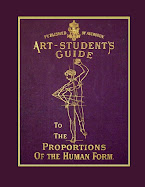
The Art Student's Guide to the Proportions of the Human Form


The Art Student's Guide to the Proportions of the Human Form is now also available at Amazon.com.

The Art Student's Guide to the Proportions of the Human Form

This is a description of the book from a page of the study of Human Proportions through the ages: Proportionslehre from the Luitpold-Gymnasium München:

"Leonardo illustrated one of the most significant proportion lessons of the Renaissance, "De Divina Proportione", by the mathematician Luca Pacioli. Also Dürer based his "Four Books of Human Proportions" on Vitruvius, whose scheme he refined. All these proportions systems go from the human body as unit and define its parts as a ratio of the whole.
Undoubtedly one of the first to deviate from this thinking was the Court Sculptor to Friedrich Wilhelm IV, J.G. Schadow. In "Polykleitos or Guide to the Proportions of the Human Form ," he uses the Inch, an absolute measure which is outside the body to divise a system of measurement that doesn't rely on ratios. In addition, he is one of the first to publish an interest in the growth of the body. This leaves the teaching of proportion to the area of artistic interest and creates theoretical basis as for the normalization of clothing sizes which are necessary in the industrial production of clothing."


"De Divina Proportione", by the mathematician Luca Pacioli, German translation.


Albrecht Durer: Vier Bücher von menschlicher Proportion, selected images.