Showing posts with label Human Form. Show all posts

Saturday, December 12, 2009

Proportions of the Human Body - Carl Schmidt's Method


From The Proportions of the Human Figure, According to a New Canon, for Practical Use ... By William Wetmore Story, American Sculptor. A printed copy is available at Amazon.com: The Proportions Of The Human Figure: According To A New Canon, For Practical Use (1864)

"Other methods of proportion have been suggested, and argued with elaboration and ingenuity, which differ essentially from these arbitrary schemes of measurement, and are scientific and geometric in character. Among these may be mentioned the systems of Carl Schmidt, C. G. Carus, A. Zeising (another reference to Zeising in Proportion: science, philosophy, architecture By Richard Padovan), D. E. Hay, and John Gibson."

"Mr. Schmidt proposes a scheme founded upon the skeleton. He draws a line, a b, from the bottom of the spine (os cocygis) to the top of the spine, where it joins the skull. This he divides into four parts, the first of which establishes the navel, (#) the second, the top of the ribs; the third, the middle point of the sternum (z); the fourth, the end of neck where it joins the skull (a).
Upon this line a b he constructs his proportions in this wise ;—through the third point {z) he draws a horizontal line (c d) equal to | a b, intersected by a b into two equal parts (c d), showing the os humerus. At the base of the line a b he draws another horizontal line (e f) — \ a b, and divided thereby into two equal parts, and showing the thigh heads. He then draws diagonal lines from the opposite points of c d and e f, so as to cross each other
From c and d above he draws two lines diagonally crossing at a, the fourth division of a b, extending it beyond that half its length, and of this surplus making a diamond or square, set edgeways on the top of a, and this is the head of the figure.
He then draws a line (z g) parallel to a c; and from the point g, representing the nipple, draws one line to e (the right hip) and one to / (the left hip). This first line is the length from the hip to the knee, and the second the length from the knee to the ankle.
From c he then draws a line to h (the left nipple), and this is the length of the upper arm to the elbow ; from g to x (i. e., from the nipple to the navel) he again draws a line, and this is the measure of the fore-arm to the wrist, and x e=hand.
The accompanying diagram will give a clearer notion of this system than any explanation."


This was the method used by Joseph Meyer's in his encyclopedia Meyers Konversations-Lexikon.

Prof. Dr. Carl Heinrich Stratz used a nearly identical method of describing the proportions of the female in his 1911 book Die Rassenschoenheit des Weibes. Some examples from the b ook are at the Czech website: Vzpřímené postavení.

He was "one of the first researchers in growth and development. After 1900 he became more and more engaged in observations of the child's development from the new-born to the adolescent. His publications, especially his graphs and pictures of morphological changes in the childs body and the signs of puberty, have the following years deeply influenced our knowledge on "orthology" within the medical problems of youth." - H. Grimm, Arztl Jugendkd. 1979 Jun;70(3):177-92.

Read More

Friday, January 2, 2009

The Proportions of the Members in a Human Body


This image is titled The Proportions of the Members in a Human Body it is Plates 2 and 3 from A Treatise on the Art of Painting in all its Branches by Gérard de Lairesse, (1640-1711).

The book from which this image is taken was published in 1817. It contains 70 Plates. A larger image is available at The University of Glasgow's website. Other editions were published in 1752, 1777 and 1778. Wikipedia article on Gérard de Lairesse.

You can search for a copy at Abebooks.com. Use the search terms "Treatise on the Art of Painting In All Its Branches." Originally published in Amsterdam it was titled, Het Groot Schilderboeck.


He made illustrations for Govert Bidloo's anatomical atlas Anatomia Humani Corporis, (Ontleding des menschelyken lichaams)and wrote another book, The principles of Design for the Curious Young Gentlemen and Ladies, who Study and Practice the Art of Drawing, Colouring and Japanning: or A New and Complete Drawing-Book; Introduction to drawing. This book was originally titled Grondlegginge der Teekenkons.

Both books were influential in the 18th century.

Govert Bidloo's work at the Stanford University Renaissance Body Project.


Images similar to the illustration for Anatomia Humani Corporis are on display at the National Institute of Health's website of its exhibit Dream Anatomy.

Link to the Metropolitan Museum site: Analytic Diagrams of Proportion and the Human Body: From L'idea della architettura universale.


How to Draw People at Figure-Drawings.com
How to Draw Proportions at Figure-Drawings.com


Other Posts:
Foreshortening - The Figure in Perspective
Female Proportions, Male Proportions.
The Female Form - Better Figure Drawing
Amazon, Doryphorus, and Diadumenos Sculptures.
Search for all posts about Proportions.
All posts about Human Proportions.


All posts about Female Proportions.


Art Models 4: Life Nude Photos for the Visual Arts (Art Models series)


The Art Models books are a modern update of the engraved patterns of human proportions and anatomy used by artists in the past. They use a series of models in the same pose with photos taken from different angles to provide the next best thing to having a live model to sketch from.

Art Models 3: Life Nude Photos for the Visual Arts (Art Models series) (No. 3)

Art Models 2: Life Nude Photos for the Visual Arts (Book & CD-ROM) (No. 2)


Art Models: Life Nudes for Drawing Painting and Sculpting

Samples from the art models books.


More samples here.


Classic Human Anatomy: The Artist's Guide to Form, Function, and Movement


A few more illustrations of human proportions:


From Three Books of Occult Philosophy (De occulta philosophia libri tres).


From a blog entry on La medida del hombre by Geometría Caníbal this entry which has examples from De occulta philosophia, by Heinrich Cornelius Agrippa.


And three more images from De Occulta Philosophia.


De Occulta Philosophia Libri Tres (Studies in the History of Christian Thought, Vol.48)


De Occulta Philosophia


Michelangelo Buonarroti - A male nude with proportions indicated, c.1515-20.

Link to another description of female proportions.


Cesare di Lorenzo Cesariano "Ideal proportions based on the human body, from 'Di Lucio Vitruvio Pollione de architectura a libri"


Vitruvii De Architectura Libri Decem

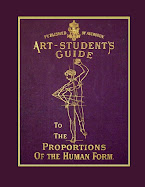
The Art Student's Guide to the Proportions of the Human Form


Proporçõs do Corpo Humano by Renato Silva blog entry at Desenhistas Autodidatas

The Art Student's Guide To The Proportions Of The Human FormHuman Proportions for ArtistsHUMAN PROPORTION WHEEL
HUMAN PROPORTION WHEEL


This example of comparative male and female human proportions showing the human body divided into eight parts is for sale on Ebay Click here to see it for sale on Ebay.

Monday, June 16, 2008

The Sculptor and Art Student's Guide to The Proportions of the Human Form


I found an 1886 German edition of Atlas Zu Polyclet Oder Von Den Maassen Des Menschen Nach Dem Geschlechte Und Alter By Dr. Johann Gottfried Schadow in an unusual reduced 9 inch by 12 inch size. The original plates published in 1836 were a giant 18 inch x 24 inch size. The Plates I originally scanned from the English Edition were 19 inches by 24 inches, making it necessary to divide them into sections to fit onto an 8.5 x 11 size.

With this new find I was able to make an appendix with the complete plate fitting onto the standard paper size in addition to the photographs and detail scans that I originally used. The 9" x 12" plates were evidently made by a photolithography process from the original large engraved plates. They preserve all of the original detail including the original German notations. The photos and detail scans have the English Typeset notations from the English Edition.

You can compare the newly available plates in the appendix with the photographs in these small reproductions.

If you have already purchased this ebook, you can go back to the download page to get the appendix. Email me if you need the download information again.

See more information at: