Showing posts with label Les Proportions du Corps Humain. Show all posts

Thursday, July 8, 2010

Kindle Edition of Gerard Audran's The Proportions of the Human Body

New Kindle Edition of Gerard Audran's The Proportions of the Human Body

Gerard Audran's The Proportions of the Human Body

Gerard Audran's The Proportions of the Human Body


Read Anywhere with Free Kindle Reading Apps
Click here to view the entire family of FREE Kindle Reading Apps. 

The Best Reading Experience for Your PC, Mac, iPhone, iPad, Android, or BlackBerry. 
Download and read Kindle books - no Kindle required.

Saturday, June 26, 2010

Gerard Audran - Les Proportions du Corps Humain


Gerard Audran, the third son of Gerard Audran Senior, followed his brother Claude to Paris in 1666 and joined him in Charles LeBrun's studio where Claude was an assistant to the master.

Gerard was already skilled in engraving, having surpassed his father in the craft and soon engraved some of LeBrun's giant historical paintings.

He travelled to Rome and produced more engravings which were praised for their technique and liveliness.

In 1683 he produced Les Proportions du Corps Humain which was a careful rendition of the famous statues of antiquity including careful measurements of each which according to Johann Gottfried Schadow were taken by his brother Claude.
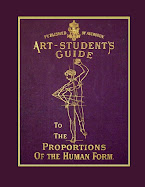
Pictured is the cover of a new edition titled The Proportions of the Human Body.

The genius of this work though was to change those measurements into proportional measurements which could be used by all artists to apply to their own works in order to achieve the beauty of the classic form.

This is a new edition of Gerard Audran's engravings with a text that I translated to the best of my ability and some additional engravings of the classic statues so that the outline drawings with measurements that Audran made can be compared to a version rendered to look three dimensional.


At Amazon.com

Gerard Audran's The Proportions of the Human Body 


The following quotation is from The Wonders of Engraving By Georges Duplessis, London, 1871
In addition to the engravings we have named after Poussin and Charles Lebrun, we must mention as exceptionally superior works by Gerard Audran, 'The Burning Bush,' after Raphael ; ' The Martyrdom of St. Gervais and St. Protais ;' ' The Aurora ;' and ' The Martyrdom of St. Lawrence,' after Eustache Lesueur ; 'The Plague of Egina ;' 'The Cupola of the Val de Grace;' and 'The Ceiling of the King's Chamber at Versailles,' after Pierre Mignard. A few engravings after the statues of Michel Anguier, Gaspard de Marsy, and Girardon, close our list of this indefatigable artist's excellent works. Until his death at Paris on the 26th of July, 1703, Gerard Audran devoted his great talent to the fine arts. We have also a treatise embellished with engravings by this master on 'The Proportions of the Human Body, after the finest Figures of Antiquity.' This work is still worthy of the honour in which it has been held since its publication (1683).
The Wonders of Engraving by George Duplessis

Another post about LeBrun.
Recherche par nom d’artiste ~ Auteur recherché : Le Brun, Charles (1619-1690)

Related Book on the use of drawings to transmit artistic ideas from one region to another and throughout time, these hand made books were called "model books" and this book discusses them and gives examples.

Exemplum: Model-Book Drawings and the Practice of Artistic Transmission in the Middle Ages (ca. 900 - ca. 1450)


Polyclet;: An analysis of measurements and proportions of the human figure for artists and sculptors;Text and Revisions by Harold Swartz a 1947 republication.  Harold Swartz was an instructor of sculpture at the Chouinard Art School in Los Angeles as well as being a sculptor, writer and lecturer.

Original German text at Google Books.


The Art Student's Guide to the Bones and Muscles of the Human Body: and Lessons on Foreshortening

Saturday, August 29, 2009

Les Proportions du Corps Human, Mesurees sur les plus belles Figures de l’Antiquite


An 1801 reissue of Les Proportions du Corps Human, Mesurees sur les plus belles Figures de l’Antiquite By Gerard Audran is for sale on Ebay.com.

Click here to see the book for sale on Ebay.

At Amazon.com:
Les Proportions du Corps Humain, Mesurees sur les plus belles Figures de l'Antiquite

From Penny Cyclopaedia of the Society for the Diffusion of Useful Knowledge:
"Gerard Audran was unquestionably one of the greatest historical engravers that has ever existed..." He was the third son of the French engraver Claude Audran and the most famous of the family.

From The Wonders Of Engraving (1871)
"Gerard Audran, the most skilful draughtsman of the French school, and evidently a master of drawing, engraved the best work of Nicolas Poussin, which may perhaps also be considered a wonder of engraving. " Time disclosing Truth " is a magnificent composition in which the painter put forth all his powers to prove the injustice of his contemporaries towards him, and it found an admirable interpreter in Gerard Audran. " Using by turns the needle and the graving-tool, he seems," says M. Denon, " to have employed these two instruments to supplement each other like the different tints under a painter's brush." The work is in fact so beautifully blended together, that in looking at it we see the composition only, and forget until we examine it closely that the engraver's skill must almost have equalled that of the painter, for him to have rendered so faithfully the work he had undertaken. Although Gerard Audran only occasionally placed his talent at the service of Nicolas Poussin,- and produced very few engravings after that master, he must still be classed with Jean Pesne, and a female artist, of whom we shall presently speak, amongst the chief of the engravers who took their inspiration from Poussin's works."
"His father, Claude Audran, was but an inferior engraver, but fortunately he knew enough to guide a beginner. It was under his direction that Gerard produced his first engravings which showed no decided taste, and gave no hint of the future works which were to come from the master's hand. A visit to Italy in early life settled his taste and expanded his mind. When he went to Rome he already knew enough of drawing to appreciate the works he saw there, and he had acquired sufficient skill in using the graver to be able at once to set to work profitably. Although he had gained admission to the studio of Carlo Maratti, he chiefly copied antique statues and the works of great masters, and we can imagine that this style of working improved him more than the lessons of his teacher." - Google Books result.
Wikipedia Article.

A related post: Les proportions du corps humain, measurées sur les plus belles figures de l'antiquité

Gerard Audran's The Proportions of the Human Body