Saturday, January 16, 2010

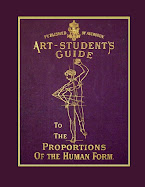
How to Draw The Human Head


Learn more about it at this post, or at Figure-Drawings.com. View a preview at Google Books.

He argues for the study of anatomy in order to improve the quality of American Art. "While the study of anatomy is so much neglected in this country, the productions of American art must be superficial and unsatisfactory. The thorough student of art finds himself rapidly acquiring knowledge of human nature. He beholds, as it were, a veil drop from the faces of his fellow-men, catches their changing emotions; understands the lights and shades of character, and reads the inner life. To assist you somewhat in this, I have given you some verbal delineations of character which I desire you to consider as simple suggestions, and by the aid of which, you will, I trust, pursue the study of the human organization and character in an ample form. Once commence to explore and analyze this department in nature, and you will find it as interesting as it is inexhaustible."

The book was published at a time when there was a movement among educators to include the study of drawing in school curriculums both to improve the quality of thinking in students, but also to provide skilled workers for the new industrialism. Here is  Louis Bail lamenting the lack of skill among American workers (sounds familiar in this day when high tech entrepreneurs complain about the need for more visas for workers from other countries) "Why is it that a majority of our apprentices are of foreign parentage? Why is it that American boys are growing too proud to "learn a trade"? Is not the cause found in the fact that our whole system of education has quite ignored the industrial life? The only legitimate result of our educational system will be the production of lawyers and doctors, or, at the least, clerks and school teachers. In consequence of this defect, children receive the impression that education has no bearing upon mechanics; that a trade is only manual drudgery. The result is, that our boys select the most effeminate employments in preference to manly mechanical work."

Bail also published a series of drawing charts which used a step by step approach to learning to draw. They became widely used in schools. This book about drawing the head was the next step for him. This is an argument for the use of the drawing charts explaining what was lacking n contemporary education: "The great obstacles to the successful teaching of Drawing in Common Schools,
have been:
1st. The lack of artistic culture and practical skill on the part of teachers.
2d. The lack of time sufficient to give pupils that individual intruction made necessary by the instructions heretofore in use.
3d. The mistaken notion that Drawing either as a science or as an art, can be acquired by transferring pictures from one piece of paper to another, without a systematic training of the hand and eye.
4th. The delaying of the stndy and practice of the art until the natural taste for the exercise has been outgrown, and the pupil's time has become too valuable to be pleasurably devoted to the training in elementary principles, necessary to ensure certain and reliable progress in the art."

A list of the plates in the book:
The Human Skull from the side.
The Human Skull from the front.
The Muscles of the Human Head from the side.
The Muscles of the Human Head from the front.
How to Draw the Mouth.
How to Draw Eyes from the side.
How to Draw Eyes from the front.
How to Draw Ears.
Facial Angles - 4 plates.
The Outline and Proportions of the Human Head in Profile.
The Outline and Proportions of the Human Head from the front.
The Head Looking Down.
The Head Looking Up.
Three-Quarters View of the Head - 2 plates.
Three-Quarters View of the Head looking down - 2 plates.
Three-Quarters View of the Head looking up - 3 plates.
Sample Drawings of Heads Illustrating the Principles of Drawing - 17 plates.
How to Draw a Caucasian.
How to Draw a African.
How to Draw Old Age - 2 plates.
How to Draw Infancy - 2 plates.
How to Draw Sobriety.
How to Draw Laughter - 3 plates.
How to Draw Discontent.
How to Draw Severity.
How to Draw Fright.
How to Draw Anxious Watchfulness.
How to Draw Bodily Fear.
How to Draw Weeping.
How to Draw Terror.
How to Draw Prayer - 2 plates.
How to Draw Innocence.
How to Draw a Misanthrope.
How to Draw Surprise.
How to Draw Great Pain.
How to Draw Rage.

An original copy of The Human Head; a Correct Delineation of the Anatomy, Expressions, Features, Proportions and Positions of the Head and Face is at Amazon.com.

William Salmon - The Art of Drawing - How to Draw

A copy of William Salmon's Polygraphice The Arts Of Drawing is for sale on Ebay. Click here to see it for sale on Ebay.


William Salmon was a physician who wrote a kind of encylclopedia of the knowledge of the day. The first part of the book was dedicated to drawing and included illustrations of the human from and lessons like the one about how to square up an image in order to enlarge it.

A digital version of the book is at Google Books. Here is and excerpt describing the proportion of the human body:


CHAP. X. - Of Drawing a naked Body.
I. IN drawing after the life, as there are variety of faces, so no certain Rules can be delivered for the same, yet the following precautions may be useful.
II. Draw out the head in an oval, one fourth pare for the hair, one fourth part for the forehead and brows, one fourth for the nose, and the last for the mouth and chin.
III. Having drawn out the head, measure out eight times the length of the head (the head making one of the eight parts) and draw a straight line from the top of the head to the sole of the foot.
IV. One heads length from the chin is for the breast; the next eighth part reacheth to the navel, the fourth part to the privities, the fifth part to the middle of the thigh, the sixth part to the lower part of the knee, the seventh to the finall of the leg, and the eighth part to the heel.
V. The muscles you must observe to draw exactly as they are in the life : the breadth of the shoulders, is about two measures of the head: the breadth of the hips, two measures of the face: the arms stretched out, are just the length of the whole figure, the breasts also accounted, but without the breasts they are but six.
VI. The arms hanging straight down reach within a span of the knee; the length of the hand is the just length of the face.
VII. Observe first to draw the head exactly, and next, the (shoulders in their just breadth: then draw the trunk of the Body, and the rest as at the first Section of the ninth Chapter.
VIII. Be sure to place the joynts, sinews, and muscles in their natural places, and also proportionately in respect of Magnitude, Similitude, and Parts. lest it seem crooked and deformed.
IX. See that every parallel joynt bend moderately, so as to answer in nature its opposite.
X. Lastly, It will be extreamly advantageous to draw very much after the life, and after good prints of Anatomy, and ftatues and Anatomies made of Plaster of Paris, which is the only way to arrive at the perfection of drawing a naked Figure well, and without which indeed, you can never expect to be a good Artist. The Picture also ought to be, quick, free, and lively; and if you have many of them in one piece, they ought to be so ordered as that they may not seem to be crouded, or to fall offensively, but ordering them gracefully (on the fore ground especially) so to manage the whole, that the rest of the Figures decline and lessen proportionably and by degrees, both in height or magnitude and strength, according to their feveral distances.


On the Gilding & Dying of Paper, &C. an Excerpt From William Salmon's Polygraphice (1685)

Polygraphice: Or, The Arts of Drawing, Engraving, Etching, Limning, Painting, Varnishing, Japaning, Gilding, Etc in Two Volumes Enlarged with about Five Hundred Considerable Additions Thru the Whole Work; and the Addition of Almost Five Whole Books, Not in Any of the Former Impressions: Adorned with XXV Copper Sculptures, the Like Never Yet Extant

A copy is in the University of Princeton Library.

Gerard de Lairesse, Govard Bidloo and William Cowper - Anatomies


In 1865 Govard Bidloo published his Anatomia Humani Corporis with illustrations by Gerard de Lairesse and engravings by Abraham Blooteling. The Dutch edition Ontleding des menschelyken lichaams  was published in 1890. Despite the achieve ment of making anatomical illustrations of the quality of fine art, sales weren't so great so he sold the images to William Cowper who then wrote an English text and added nine new plates drawn by Henry Cook and engraved by Michiel van der Gucht.
  

The new plates included front and back views of the entire musculature. Cowper's book included and engraved title The Anatomy of Humane Bodies which was actually pasted right over Bidloo's title. You can see an example here at the  University of Iowa Hardin Library which has copies of both books.

Bidloo wasn't happy about this and there were many angry exchanges and pamphlets published in defense of both men. there is more on the controversy at the University of Windsor Leddy Library.
There is an another history at MinnesotaMedicine.com: The Art of Anatomy - By Elaine Challacombe.

Plates from both books are at the National Institute of Health's web page: William Cowper, Govard Bidloo. Links to more engravings from Gerard de Lairesse are at the Wellcome Library's collection.


A print is for sale on Ebay Click here to see them for sale on Ebay.

Signed: H. Cook Delin. / M. Vander Gucht sculp.

Notes from the seller:

The anatomy of humane bodies, with figures drawn after the life by some of the best masters in Europe, and curiously engraven in one hundred and fourteen copper plates, illustrated with large explications, containing many new anatomical discoveries, and chirurgical observations, to which is added an introduction explaining the animal oeconomy, with a copious index." Publication: Oxford : Printed at the Theater, for Sam. Smith and Benj. Walford ... London, 1698. The final 9 plates in the Appendix were drawn by Henry Cook and engraved by Michiel van der Gucht. Author: Cowper, William, 1666-1709. Author: Bidloo, Govard, 1649-1713. Artists: Lairesse, Gérard de, 1640-1711 (first 105 plates); and Cook, Henry, 1642-1700 (final 9 plates) Engravers: Blooteling, Abraham, 1640-1690 (first 105 plates); and Gucht, Michiel van der, 1660-1725 (final 9 plates)